Is matcha foidslop?
A green tea latte over ice that costs about as much as lunch and has to be photographed before anyone drinks it.
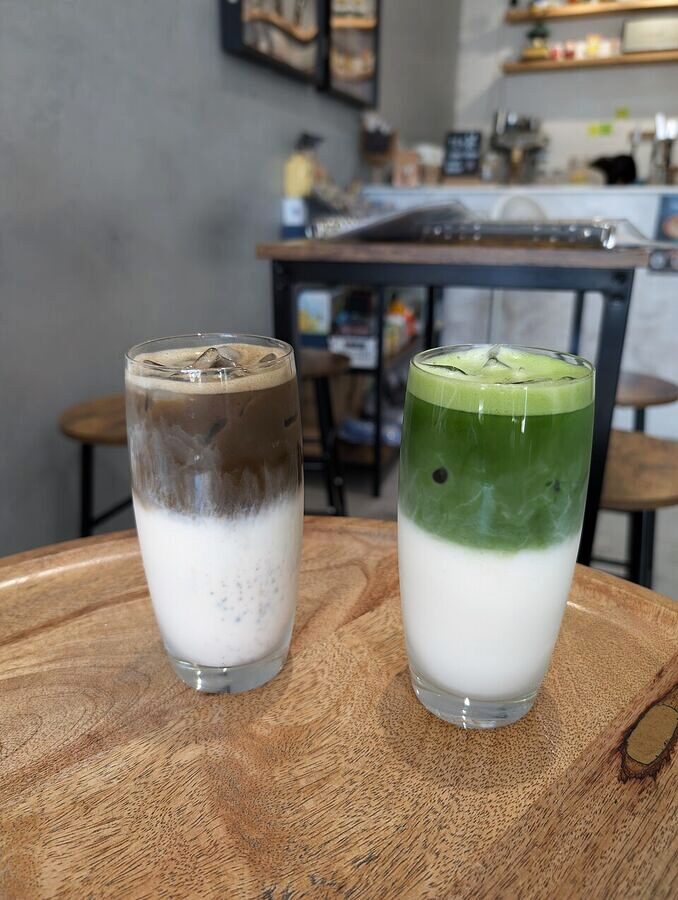

An iced matcha latte is powdered green tea whisked with water and poured over milk and ice, usually oat milk and usually with vanilla syrup. It comes in a clear cup so you can see the green settle on top of the white, and you're expected to film that before you stir it. In most cities it runs somewhere between seven and ten dollars.
If you ask someone who drinks it every day, you'll hear about ceremonial grade powder and a bamboo whisk they bought online. If you ask a coffee drinker, they'll tell you it tastes like grass. We drink it constantly and still can't fully argue with the grass thing.
Matcha is shade-grown green tea that's ground into a fine powder, so you drink the whole leaf. It's been part of Japanese tea ceremony for centuries, and most of the best-known growing regions, like Uji near Kyoto, are in Japan. The latte version, with milk and sweetener, is much newer and spread through Western cafés over the 2010s.
By 2025 demand had grown fast enough that Japanese producers reported shortages, and some tea shops limited how much matcha a customer could buy. A lot of that demand came from people who had seen it on social media. 'Ceremonial grade' is printed on a lot of the tins, but it's a marketing label without any official standard behind it, which tea people like to point out.
Yes, because
- The clear cup matters more than it should
- It comes with its own whisk and its own price bracket
- It's almost always ordered with a pastry
No, because
- Matcha has been part of Japanese tea ceremonies for centuries
- A lot of finance guys switched to it for the 'clean energy' and won't shut up about it
- The drink itself has more caffeine than people expect and works fine as a coffee replacement
More on the words: what foidslop means. More like this in foidslop food and drinks.